
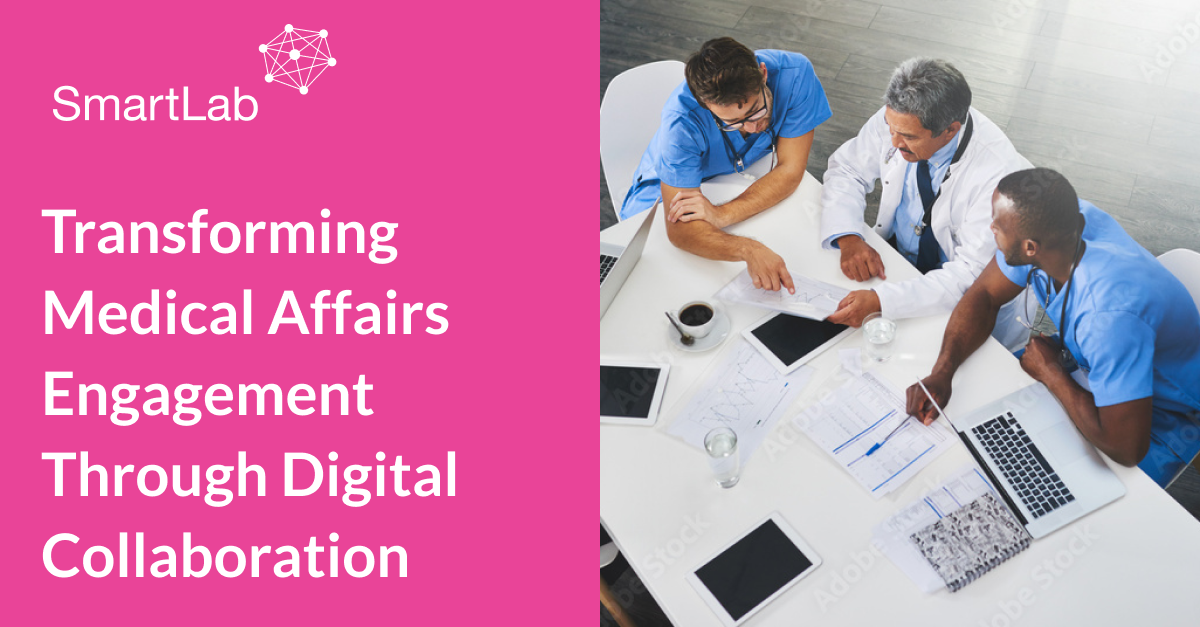
Medical Affairs plays a pivotal role at the intersection of science, strategy, and communication. As the bridge between R&D, commercial, and clinical teams, it ensures that accurate, evidence-based information reaches every stakeholder — from internal colleagues to healthcare professionals and regulatory bodies.
Yet, as the pharmaceutical landscape evolves, so too does the way Medical Affairs teams need to operate. To meet the demands of increasingly global, data-rich, and regulated environments, they must find new ways to collaborate with both speed and precision.
Medical Affairs teams today face a unique set of challenges. They are dispersed across geographies, therapeutic areas, and functions — each working within different systems, communication channels, and compliance frameworks.
These silos make it difficult to share insights efficiently or maintain visibility over evolving strategies and activities. At the same time, strict regulatory oversight and data privacy requirements mean that even simple collaboration must be carefully controlled and documented.
The result? Slower communication, duplicated effort, and valuable medical insights that remain underutilized. In oncology especially, where rapid scientific progress demands near real-time coordination, the traditional ways of working are no longer sustainable.
The future of Medical Affairs lies in structured digital collaboration — creating connected, compliant environments where teams can engage dynamically without compromising regulatory integrity.
Forward-looking organizations are moving beyond fragmented tools and ad-hoc communication. They’re embracing digital ecosystems that integrate learning, dialogue, and documentation into one secure, auditable platform.
This shift allows Medical Science Liaisons (MSLs), field teams, and internal stakeholders to collaborate seamlessly across regions and functions — sharing insights, aligning strategies, and acting on new data quickly while maintaining full traceability and compliance.
SmartLab was designed to meet precisely these needs. It provides a secure, structured, and audit-ready environmentwhere Medical Affairs teams can collaborate, learn, and communicate — all within compliant digital frameworks.
Through SmartLab, organizations can:
The result is a unified digital workspace that allows Medical Affairs to act with agility, transparency, and confidence — accelerating scientific understanding and improving alignment across the enterprise.
As the role of Medical Affairs continues to expand, digital collaboration isn’t just a convenience — it’s a strategic imperative. Teams that can share insights faster, train smarter, and engage more effectively are those that will drive the greatest impact on patient outcomes.
SmartLab empowers Medical Affairs professionals to do just that — combining the flexibility of modern collaboration with the rigour of regulatory compliance. It’s where science meets structure, and engagement becomes effortless.